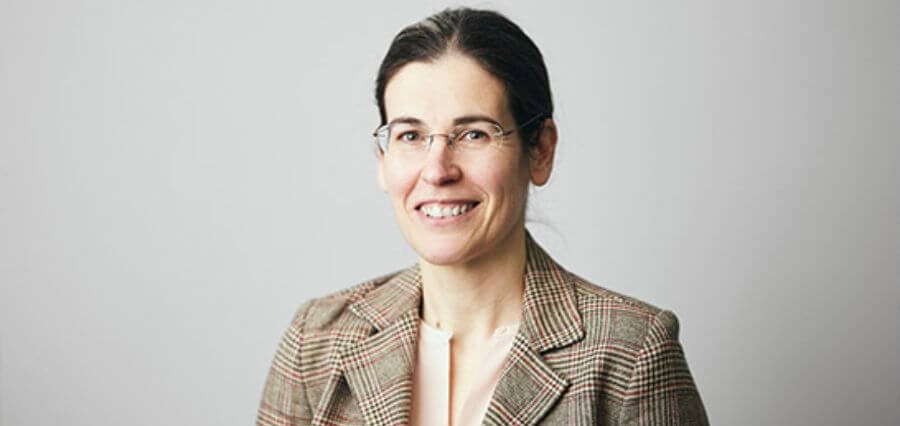

Some careers follow a straight line. Dr. Elise Hickey’s career does not. Her professional journey has moved through psychology, philosophy, medicine, longevity and nutrition, aesthetics, art history, real estate development and design, manufacturing, e-commerce, and eventually mergers and acquisitions, impact investment, and ecosystem building.
For many years, that breadth appeared to lack a clear centre. Elise herself once viewed her professional path as somewhat disjointed. With hindsight, however, she sees something very different. Every discipline gave her another lens through which to understand how people, industries, capital, infrastructure, and opportunity interact.
Her journey began in dentistry, but entrepreneurship shaped how she approached every discipline that followed. Rather than treating education as an end in itself, she consistently turned what she learned into something practical. Each new area of knowledge became an opportunity to build, test, make mistakes, learn, and create again. For Elise, applied knowledge became the most valuable form of education because it forced ideas to work beyond the safety of theory.
That curiosity eventually led her into an unexpected direction. Elise had previously built and operated a business manufacturing aircraft parts, which gave her an unusual profile when opportunities in defence emerged. Defence opened the door to mergers and acquisitions, and M&A subsequently introduced her to impact investment.
That was where the pieces began to come together.
Elise discovered that her diverse background did not represent a lack of focus. It represented a different kind of focus: the ability to move across disciplines and recognise relationships that remain invisible when each sector operates independently.
“Range isn’t the absence of focus; it’s focus applied differently each time,” she explains.
That belief now sits at the heart of her leadership philosophy.
Seeing the Connections Others Miss
Elise’s work starts with a simple observation: almost nothing operates in isolation.
Healthcare depends on transport. Transport depends on infrastructure. Infrastructure depends on water. Water supports food systems. Food depends on energy. Energy connects with defence. Each system carries implications for another.
Rather than specialising in one link, Elise works across the chain.
This perspective has revealed a recurring problem. The world does not lack ideas, capital, expertise, or ambitious people. Instead, it often lacks the connective tissue that allows those resources to work together.
An innovator may possess an effective technology but lack access to the right market. An investor may have capital but lack visibility into an opportunity. A business may have a valuable asset but use a financial structure that prevents the right capital from reaching it. A community may bring influential people together but fail to maintain the relationships and opportunities that emerge after the event.
Elise’s work focuses on these gaps.
She describes herself first as a connector and fundraiser, bringing capital, people, and innovation together. Her companies provide the infrastructure through which those connections can become practical outcomes. For her, the transaction never represents the entire purpose. Genuine value emerges when the right people, resources, and ideas meet under the right conditions.
This philosophy has shaped two independent companies: Comet Alliance and Comet Catalyst.
Building the Infrastructure Between Opportunity and Action
Comet Alliance focuses on physical infrastructure and the energy transition. Its purpose centres on closing the gap between existing opportunity and actual deployment.
A striking example sits within commercial real estate. Vast numbers of commercial buildings already exist, already connect to the grid, and already generate income. At the same time, significant pools of capital seek exposure to the energy transition. Yet these two sides often remain disconnected because no one takes responsibility for structuring the opportunity between them.
Comet Alliance takes on that structuring role.
The company also approaches innovation through market access. Many technology companies develop solutions to increasingly urgent problems but struggle to identify the buyers who need them. Instead of presenting an innovation as a single product for a single industry, Elise looks at the underlying problem it solves and explores where that solution could create value across multiple sectors.
Cold-chain facilities, ports, hospitals, universities, and other infrastructure-heavy environments may appear unrelated, yet they can face remarkably similar challenges around energy, efficiency, resilience, and infrastructure.
By examining those connections, Elise can transform an innovation with one apparent market into a solution with several potential markets.
That approach reflects her broader philosophy: the opportunity often emerges when someone steps outside the boundaries of a single sector.
Comet Catalyst tackles a similar structural gap, but in human infrastructure.
High-value forums, summits, investor communities, and professional networks can create powerful moments of connection. People meet, ideas emerge, introductions happen, and potential deals take shape. Yet those relationships often lose momentum once participants return to their normal routines.
Catalyst exists in that space between gatherings. Through editorial work, community dispatch, capital placement, and bespoke introductions, it helps sustain the momentum generated by high-value communities.
The distinction between the two businesses remains clear, but the philosophy behind them remains connected. Comet Alliance works with the infrastructure that enables physical opportunity. Comet Catalyst works with the relationships and momentum that enable human opportunity.
“Networks create the moments. Catalyst sustains the momentum.”
Creativity Backed by Rigour
Elise’s ability to connect sectors gives her a distinctive perspective, but she does not rely on intuition alone.
One of her strongest assets is creativity, although she defines creativity differently from conventional interpretations. For Elise, creativity means recognising structures that others may not see and then finding a practical way to build them.
Consider a technology company seeking funding. The company may assume it needs equity because that represents the conventional route within its industry. Elise may identify another possibility. A change in the structure, such as moving from a lease arrangement to asset-backed finance, could unlock capital without requiring the company to surrender ownership.
Similarly, an energy-transition business may search for funding within the energy sector while agricultural programmes hold the more suitable capital because the technology supports agricultural electrification.
These opportunities require someone to step back from the immediate problem and understand the wider architecture.
Yet creativity without discipline can create unnecessary risk. Elise addresses that challenge through a 120-point due diligence framework that she developed herself. She applies structured assessment across sectors and geographies before allowing an opportunity to carry capital or reputation.
Her principle remains straightforward: conviction must survive scrutiny.
That combination of imagination and discipline allows her to pursue unconventional structures without abandoning careful evaluation.
Leadership Through Partnership
Elise approaches people differently from traditional organisational models. Rather than building teams primarily through hiring, she builds them through partnerships, collaboration, and shared commitment.
That approach changes how she evaluates talent.
She looks beyond current credentials and focuses on potential. Expertise can develop with time, but proactivity and resilience prove much harder to cultivate. She values people who take action without constant prompting and recover when circumstances become difficult.
For Elise, a strong CV cannot compensate for a lack of those qualities.
Her leadership style also reflects a strong emphasis on alignment between words and actions. Experience has taught her that relationships become sustainable only when behaviour supports promises. She therefore prefers a smaller circle of reciprocal relationships over a large network built on superficial connections.
Her approach to mentorship follows the same principle.
With training as a business coach, Elise sees her role less as giving instructions and more as helping people recognise patterns in their own behaviour. A useful mentor does not always need to provide the answer. Sometimes the greater value comes from helping another person see something they already do well, or something that repeatedly holds them back.
She believes every person holds one piece of a much larger puzzle. When a leader assumes they possess the entire puzzle, others wait for instructions. When a leader recognises that others hold valuable pieces too, collaboration becomes stronger.
Staying Ahead by Looking Beyond the Industry
Elise does not believe the best signals always come from within one’s own sector.
Instead, she deliberately reads across industries and watches developments outside her immediate field. When everyone within an industry follows the same reports, conferences, and commentary, they often identify the same trend at the same time. That makes the signal less valuable.
The earlier clues frequently come from neighbouring sectors.
A shift in agricultural policy may reveal future energy demand. A financing structure common in real estate may provide an answer for an infrastructure challenge. A change in one market can quietly create an opportunity somewhere else.
Elise also places considerable value on relationships as an information system. Conversations within serious professional communities can reveal emerging developments long before they appear in mainstream industry analysis.
However, she maintains a clear distinction between something being interesting and something being investable. Her due diligence framework provides the discipline required to make that distinction.
Energy, Sovereignty and the Next Decade
Looking ahead, Elise sees energy becoming one of the defining constraints across the global economy.
She points to growing demand for computing power and the pressure that demand places on existing grid capacity. As technology industries expand, access to reliable power can become a greater limitation than access to chips, capital, or talent.
At the same time, large amounts of commercial infrastructure already sit connected to the grid. Elise sees an opportunity where these two developments intersect: existing physical assets may find new uses if businesses can structure them correctly.
For her, this represents a deployment challenge as much as an innovation challenge.
Another major force involves national sovereignty. Countries increasingly reconsider their dependence on external sources for energy, food, computing capacity, defence, and supply chains. These decisions can influence where companies build, where capital flows, and how entire industries organise themselves.
Elise views these pressures not simply as risks but as opportunities for people capable of creating new structures.
The agility of smaller organisations can become a meaningful advantage in such an environment. Large institutions often organise themselves around established sectors, while emerging problems increasingly cross those boundaries. Elise believes this mismatch can create space for organisations that work across sectors rather than inside only one.
A New Case for the Generalist
Perhaps Elise’s most significant message for the next generation comes directly from her own unconventional career.
She believes the future will increasingly favour generalists at a time when education and professional culture have spent decades encouraging specialisation.
Traditional career advice encouraged people to develop deep expertise in a narrow field. That approach made sense when specialised knowledge remained scarce. Technology now changes the equation. As access to knowledge becomes faster and easier, the ability to combine different areas of knowledge becomes increasingly valuable.
Elise believes future leaders will need to wear several hats. They will need to understand multiple domains, recognise relationships between them, and apply what they learn rather than simply collecting qualifications.
Her advice is therefore practical: multiply your skill set, then use it.
Learning should lead to action. Knowledge should become something people build with, test, refine, and apply. A diverse skill set only becomes valuable when it creates connections and produces outcomes.
Her own career provides the clearest example of that philosophy.
Building a Legacy That Keeps Moving
Elise’s vision for her legacy does not centre on a monument, title, or individual achievement.
She wants to prove that range can become an asset.
For years, she felt some pressure to explain a career that crossed multiple disciplines and businesses without following a conventional linear path. Today, she sees that journey differently. The apparent detours gave her the perspective required to understand connections that a narrower path might not have revealed.
She hopes younger professionals will recognise that possibility earlier and trust their curiosity instead of apologising for it.
For her businesses, the ambition remains equally practical. She wants the connective infrastructure she creates to continue working beyond her direct involvement. If the relationships, structures, communities, and opportunities continue moving after the founder steps back, she considers that a meaningful measure of success.
Her understanding of legacy also extends into her family life. Her two teenage boys have grown up alongside the realities of entrepreneurship, witnessing the successes as well as the mistakes, setbacks, rebuilding, and persistence that accompany the journey.
Elise believes that observation has taught them lessons that no formal explanation could provide. Watching someone build, fail, rebuild, and continue creates a powerful form of education.
That idea captures the essence of her broader approach to leadership.
Legacy does not need to wait until the end of a career. It can already exist in circulation through the people influenced by the journey.
The Work Between the Gaps
Dr. Elise’s story ultimately challenges the conventional definition of focus.
Her career demonstrates that a broad range of disciplines can create depth when someone learns to connect them. Her companies demonstrate that valuable opportunities often emerge in the spaces between established sectors. Her leadership approach demonstrates that strong relationships require trust, integrity, care, and reciprocity. Her outlook on the future highlights the importance of adaptability when industries increasingly collide.
Above all, Elise has built her career around connection.
She connects capital with opportunity, innovators with markets, people with people, infrastructure with new possibilities, and knowledge with practical action.
Her work also reflects a deeply personal philosophy. Business, for Elise, provides a canvas on which she can create, experiment, grow, and contribute. Creativity guides the brush. Growth provides the compass. Love remains the line that connects everything.
That combination gives her vision a distinctive character. It is ambitious without losing its human centre, commercially minded without reducing every relationship to a transaction, and future-focused without losing sight of the people who make progress possible.
In a world where the biggest opportunities increasingly sit between industries rather than inside them, Elise has chosen to work precisely where the boundaries disappear.
The real opportunity, she believes, lives in the gaps.
And her work is about turning those gaps into bridges.