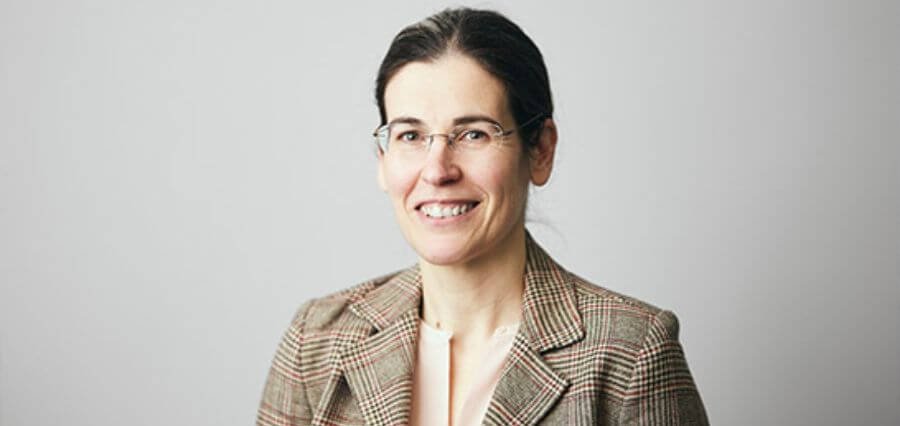
There was a time when the trucking industry was not part of Ellen Voie’s plans. She imagined a future in broadcast journalism, far from the highways, distribution networks, and transportation systems that would eventually define her professional life. Yet, sometimes, the most consequential journeys begin with an unexpected turn. For Voie, a series of personal circumstances and professional opportunities led her into an industry where women remained underrepresented and their needs were often overlooked. What began as a practical career decision gradually became something much larger: a mission to change who could see themselves in transportation and what the industry could become when women were given the opportunity to participate fully.
Her story is not simply about entering an unfamiliar profession. It is about recognizing an overlooked problem, bringing people together around a shared purpose, and building an organization capable of turning that purpose into lasting change. As the founder of the Women In Trucking Association, Voie helped create a platform for women across the supply chain, from professional drivers and mechanics to safety specialists, executives, and boardroom leaders. Her journey demonstrates that leadership does not always begin with a carefully designed ambition. Sometimes, it begins when someone notices what is missing and decides that leaving it unaddressed is no longer an option.
When Life Changes the Destination
During high school, Voie never imagined building a career in trucking. She aspired to work in broadcast journalism, pursuing vocational education and college credits in the field. However, after securing a radio station position in Ohio, she found the long hours and low pay disappointing, prompting her to reconsider her future.
Her first career shift came when she returned home to care for her ill mother. She accepted a temporary drafting position at a steel fabrication plant, where her high school training in drafting and welding helped her design material-handling equipment, including pallets, racks, and bins.
Following her mother’s death after an eight-month battle with amyotrophic lateral sclerosis (ALS), Voie expected to leave the company. Instead, its president offered her a position in the shipping department. She embraced the unexpected opportunity, beginning a journey into transportation.
Starting as an assistant traffic manager, she earned a diploma in Traffic and Transportation Management through LaSalle Extension University. When her supervisor departed, she became traffic manager, overseeing incoming raw materials, outgoing steel shipments, and three drivers serving three manufacturing facilities.
She was just twenty years old, gaining significant operational responsibility and practical industry experience early in her career.
After starting her family, Voie worked as a freelance transportation consultant for nearly 18 years while raising her two children and supporting her former husband’s trucking business. During this period, she earned bachelor’s and master’s degrees in communication, strengthening skills that would later prove valuable in leadership, advocacy, and public speaking.
In 2000, she became executive director of Trucker Buddy, a nonprofit connecting professional truck drivers with elementary school classrooms. Through interactive activities, children explored transportation, mapped routes, and calculated fuel efficiency, introducing them to opportunities they might never otherwise have considered.
Recognizing the Missing Voice
In 2006, Voie moved to the carrier side of the transportation industry when she joined a large Midwestern trucking company as manager of retention and recruiting programs. Her work focused on attracting and retaining drivers from groups that were not traditionally represented in the profession, including women.
The role required her to understand why people entered the industry, what prevented them from joining, and what encouraged them to stay. Women were significantly underrepresented, and their specific experiences deserved greater attention.
Around the same time, Voie was working toward her private pilot’s license and joined an association for female pilots. Through that experience, she recognized the value of having a dedicated organization representing women within a traditionally male-dominated profession.
One question stayed with her: why was there no equivalent organization for women in trucking?
The absence revealed an opportunity. Women working in transportation needed more than individual encouragement. They needed a collective voice capable of identifying barriers, sharing experiences, supporting professional development, and encouraging the industry to reconsider established practices.
Voie brought together influential women who shared her vision of making transportation careers more attractive and accessible to women. In March 2007, the group established its mission statement and bylaws, formally creating the Women In Trucking Association.
The organization’s original mission was clear: encourage the employment of women in the industry, address obstacles that could prevent them from succeeding, and celebrate the achievements of its members.
The ambition extended beyond increasing the number of women behind the wheel. Women were underrepresented throughout transportation, including in mechanics, safety, management, executive leadership, and boardrooms. The association sought to make these career opportunities visible while helping women navigate the professional challenges associated with entering and advancing within the industry.
As the organization developed, it began tracking women’s progress across these roles. According to Voie, the numbers of women advancing into positions such as directors, CEOs, safety professionals, mechanics, and drivers have increased since the association’s inception.
Today, the Women In Trucking Association stands as the first and largest organization representing women in transportation careers, according to Voie. Its annual conference has attracted as many as 1,800 women seeking opportunities to learn, connect, and build professional relationships. Its defining purpose remains straightforward: to be a voice for women across the supply chain.
Turning Everyday Barriers into Industry Change
Building an organization around a meaningful mission is one challenge; establishing credibility and demonstrating measurable value is another. For Voie, one of the earliest obstacles was convincing companies and individuals to support a nonprofit whose long-term impact was still emerging. Limited research on women in transportation made it difficult to understand what attracted them to the industry, why they left, and which workplace challenges affected them.
The association began examining women’s practical experiences to identify unnecessary barriers. Some were surprisingly fundamental. Women truck drivers often struggled with cab designs that failed to accommodate different body proportions. Shorter arms and legs could make it difficult to see over the hood or comfortably reach the pedals.
Rather than treating these difficulties as individual limitations, the association engaged truck cab manufacturers to encourage more inclusive designs that accommodated a wider range of physical dimensions.
Workwear presented similar challenges. Women were frequently provided with uniforms designed for men, while essential safety equipment, including steel-toe shoes, high-visibility clothing, and gloves, was not always available in appropriate sizes. Voie advocated for better-fitting clothing and equipment without compromising workplace safety.
These initiatives reflected a broader principle: industries should not expect everyone to adapt to systems designed around one group. Equipment, clothing, and workplace practices must evolve alongside the workforce.
Voie has also emphasized the importance of considering different perspectives in risk assessment and executive decision-making. For her, representation extends beyond symbolic inclusion. Diverse viewpoints can encourage questions, challenge assumptions, and help organizations evaluate alternatives more thoughtfully.
Consequently, the association combines advocacy with practical industry engagement. Its mission is not simply to encourage women to enter transportation, but to help create working environments where they can participate effectively, contribute confidently, and build lasting careers.
A Leadership Philosophy Built on Trust
Although Voie has retired as CEO of the Women In Trucking Association, her relationship with the mission continues. As founder, she remains committed to sharing its message, encouraging women to explore transportation careers, and communicating the industry’s evolving challenges through writing, conferences, interviews, podcasts, and her book, From Dispatcher to Disrupter.
Her leadership philosophy is grounded in trust and individual responsibility. She believes people should be encouraged to do work they enjoy and are well suited for, with leaders providing direction without unnecessarily interfering in how the work gets done.
This approach was particularly important in a remote-work organization. Without a conventional office environment, she could not manage employees through constant supervision. Instead, she emphasized self-motivation, hiring and promoting people who could take ownership of their responsibilities.
The organization did not rely on a traditional employee handbook outlining fixed work hours and vacation arrangements. Its expectation was that employees would fulfil their responsibilities while managing their work around their family and personal commitments.
This model placed considerable importance on mutual trust. Employees received the latitude to organize their work, while accountability remained tied to the responsibilities they had accepted.
For Voie, effective leadership is not about controlling every decision. It is about establishing a meaningful direction, selecting capable people, and giving them room to contribute.
That philosophy also shaped her approach to mentoring future leaders. She believes a leader should create an image of a better future that others can understand and support. Once that vision is clear, the team must have the freedom to turn it into reality.
The association’s initiatives for young people offer examples of this approach. When Voie learned that the Boy Scouts had a transportation badge but the Girl Scouts did not, the organization developed a corresponding patch, curriculum, and workbook. Her role was to establish the vision; her team took responsibility for making it happen.
The association also created a truck-driver doll intended to introduce young girls to the profession and help them imagine themselves as future professional drivers.
These initiatives addressed an important part of representation: the careers people can envision for themselves. Introducing transportation to girls at a young age can help make the industry familiar rather than distant, opening the possibility of a future that might otherwise never enter their consideration.
Voie encourages emerging leaders to take ownership of projects, make decisions, and accept responsibility for both positive and negative outcomes. The process builds confidence, judgment, and an understanding of accountability. It also creates space for team members to develop their own leadership capabilities rather than simply execute someone else’s instructions.
Speaking Up When the Industry Needed It
The importance of advocacy became particularly visible during the COVID-19 pandemic. As businesses restricted access to facilities and communities limited movement, professional drivers faced practical difficulties while continuing to move essential goods.
Rest areas closed, restaurants stopped allowing indoor dining, and some shippers prevented drivers from entering their facilities to use restrooms. For people already spending extended periods away from their families, these restrictions created additional hardships.
Voie recognized that these were not simply operational inconveniences. They affected the daily lives of the people keeping supply chains moving.
The association responded by speaking on behalf of drivers and carriers, communicating the personal consequences of these restrictions to companies and encouraging decision-makers to consider the needs of the people doing the work.
This response reflected one of the principles guiding her leadership: members must be heard, and their needs must be accommodated so they can perform their jobs.
It also illustrated the value of industry associations. Individual drivers may struggle to influence the policies of large organizations, but a collective voice can bring their experiences into broader discussions. Advocacy becomes more effective when it translates everyday difficulties into concerns that decision-makers can understand and address.
Voie’s approach to leadership has therefore extended beyond organizational management. It involves listening to people, identifying the practical consequences of decisions, and ensuring that the perspectives of those closest to the work are not overlooked.
Recognition, Learning, and a Changing Industry
Voie’s contributions have received recognition from outside and within the transportation community. In 2012, the White House recognized her as a Transportation Innovator Champion of Change. The occasion gave her an opportunity to share the association’s story, while members of her board attended the event.
In 2019, she was named a Cinderella to CEO recipient. She has also received recognition from magazines and other organizations, with particular appreciation for honors that bring attention to her work beyond the trucking industry itself.
Yet her approach to professional growth has remained focused on learning rather than recognition alone.
Over the years, Voie completed numerous certificates and diplomas in supply chain training, spanning subjects from less-than-truckload transportation to executive leadership. She earned her Certified Association Executive credential in 2005 and maintained it through continuing education.
She also attended organizational conferences and industry meetings, recognizing that associations provide valuable opportunities to understand emerging trends, exchange knowledge, and remain connected to changing professional expectations.
This commitment to learning is especially relevant as transportation navigates technological change. Autonomous trucks are being tested in limited markets, raising questions about how automation may affect professional drivers and the future structure of the industry.
Voie believes technology should be approached thoughtfully. The industry must not discourage drivers by presenting a future in which their role simply disappears. Instead, technological developments should be considered for their potential to support drivers and improve road safety, while recognizing the continued importance of an operator in the cab.
The challenge is to embrace innovation without losing sight of the people whose expertise keeps transportation functioning.
The Road Ahead and the Legacy Beyond It
As the founder of the Women In Trucking Association, Voie looks toward the organization’s twentieth anniversary in 2027 with an interest in examining how both the association and the industry have progressed over two decades.
Her goal remains to keep the organization focused on representing women throughout the supply chain. The work also includes the Women In Trucking Scholarship Organization, established to provide financial support for women pursuing careers in the industry.
For Voie, the long-term impact of greater representation will extend beyond recruitment figures. She envisions an industry that pays greater attention to safety, leadership, engagement, and the needs of drivers outside the truck cab. Professional drivers do not leave their personal responsibilities behind when they begin a journey. Their families need support, too.
This broader understanding of workforce participation recognizes that meaningful progress depends on the conditions surrounding a career as well as the opportunity to enter it.
Her advice to aspiring professionals is direct: ask questions. Understand what a role entails, learn how you might fit into an industry, attend conferences, join professional associations, and build relationships with others in the field. Questions, she believes, are essential to making informed decisions and discovering opportunities.
Several personal principles complement this practical guidance. “Life begins at the edge of your comfort zone” captures the willingness to explore unfamiliar directions that shaped her own career. “Assume good intent” reflects the value she places on constructive relationships. She also draws inspiration from Henry Ford’s observation about belief and possibility, alongside Eleanor Roosevelt’s emphasis on ideas rather than events or personal criticism.
Together, these ideas express a leadership approach that values curiosity, openness, and the willingness to act on a better vision.
Ellen Voie’s career began with a destination in mind and developed through opportunities she could not have anticipated. Each transition, from journalism to drafting, transportation management, consulting, nonprofit leadership, and industry advocacy, added a new perspective to her understanding of work and leadership.
Her most enduring contribution, however, may be the space she helped create for others.
Through the Women In Trucking Association, she has helped ensure that women have a platform from which to pursue careers, raise concerns, develop professionally, and contribute to the future of transportation. Through scholarships, educational initiatives, practical advocacy, and mentorship, the mission continues beyond any single leadership tenure.
Voie may no longer serve as the association’s CEO, but retirement has not brought her story to a close. She continues to write, speak, share her experience, and encourage women to see possibilities in an industry that once seemed beyond their reach.
Ultimately, her legacy will be measured not only by the organization she founded, but also by the opportunities it helps make possible. Every woman who enters a transportation career with greater confidence, every workplace that adapts to meet its employees’ needs, and every young girl who begins to imagine herself behind the wheel represents another step toward the future Voie set out to build.
She entered trucking through an unexpected turn. She stayed because she saw what needed to change. And through her work, she helped make the road ahead more accessible to the women who will travel it next.