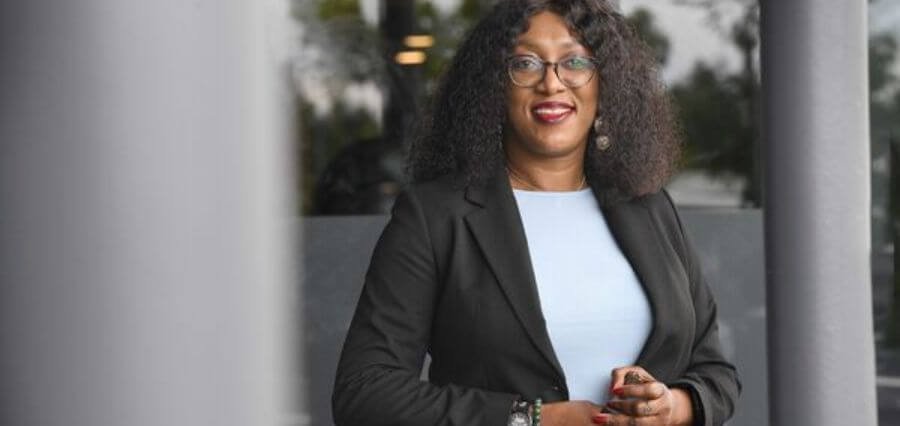

Some people build brands around what they have achieved. Char Murphy has built her work around what she has learned—and what she can help others do with what they have lived.
There is a particular kind of influence that cannot be manufactured through polished profiles, carefully planned posts, or impressive titles. It is the influence that comes from having listened deeply, endured profoundly, rebuilt intentionally, and then chosen to turn personal experience into something useful for others.
For Char Murphy, Esq., that kind of influence has become the foundation of an unusually multidimensional career. A lawyer, entrepreneur, author consultant, publisher, communications strategist, brand advisor, leadership mentor, and founder, Murphy has spent years helping people find the words for experiences that often feel difficult to explain.
Her professional journey has moved through civil litigation, entrepreneurship, writing, publishing, communications, branding, and leadership development. On the surface, those disciplines might appear unrelated. For Murphy, however, they are connected by a single thread: people and the stories they carry.
Her early education in psychology and English gave her an understanding of both human behavior and language before she earned her law degree and entered civil litigation. The legal profession sharpened skills that would later become central to everything she does—listening carefully, looking beyond the first version of a story, separating what is important from what is merely being said, and communicating complex information in ways people can understand.
Law also taught her something even more fundamental: trust is not given simply because someone has expertise. It is earned through preparation, honesty, consistency, and the willingness to stand beside another person when the stakes are high.
Those lessons would eventually become the foundation for a very different chapter of her life.
After surviving breast cancer four times, Murphy retired from civil litigation. Stepping away from law meant more than leaving a profession. It required her to reconsider an identity that had long been defined by professional achievement and to ask who she was beyond the titles that once explained her.
That period of transition opened the door to writing, speaking, author consulting, and brand strategy. She founded BelieveInspire and, in September 2022, launched The Mission Hope Movement, a vision that would bring together many of the experiences and skills she had accumulated throughout her life.
Mission Hope was not simply another business venture. It emerged from a deeply personal conviction that adversity can leave people feeling disconnected from the person they once were—and that another person’s honest story can sometimes reach them at precisely the moment they need reassurance that they are not alone.
What began as a book concept evolved into something larger: a community, publishing platform, and storytelling movement centered on faith, hope, resilience, transformation, and service. As the movement grew, these values became more than guiding principles; they took shape around three foundational pillars that continue to define its purpose: Hope, Healing, and Transformation.
Today, Mission Hope has published seven volumes and shared more than 100 author stories with readers. Volume 7, Finding Strength in Every Storm, became a #1 international bestseller and a #1 Amazon Hot New Release in Spiritual Biography and Reference & Collections of Biographies. Volume 8 is now in progress with fifteen authors.
The movement has also become an official 501(c)(3) nonprofit organization, giving Mission Hope a stronger foundation for its continuing service.
Yet for Murphy, the numbers and recognition tell only part of the story.
When a Story Becomes a Bridge
At the heart of Mission Hope is a deceptively simple idea: people should not be reduced to the hardest thing that ever happened to them.
Murphy understands that adversity can reshape a person’s health, family, identity, faith, career, and sense of self. But she also understands that a person’s story contains more than pain. There can be doubt alongside faith, humor alongside grief, strength alongside vulnerability, and transformation alongside loss.
That is why she does not look for the most dramatic story when deciding which experiences deserve to be brought forward. She listens instead for honesty, reflection, perspective, and a genuine desire to help another person.
A meaningful story, in her view, does not have to be extraordinary by conventional standards. Its value can emerge from what someone has learned and how that understanding might help another person navigate a difficult season.
There is also an important responsibility in telling personal stories. Authenticity does not mean exposing every private detail. Murphy encourages authors to consider whether they are ready to share their experiences in ways that protect their own well-being while respecting the dignity of other people connected to the story. The goal is truth without unnecessary accusation. Vulnerability without exploitation. Honesty without turning someone else’s pain into a spectacle.
That approach has helped create a community in which authors are not treated merely as content contributors. They are people entrusted with experiences that deserve to be handled carefully.
Mission Hope is built around relationships rather than transactions. Authors receive guidance, but they retain ownership of their voices. They are encouraged to identify the experience at the center of their message, understand who may need to hear it, and recognize that their contribution becomes part of something larger than a single publication.
The result is a community where authors celebrate one another’s milestones, encourage one another, and recognize the collective value of their individual stories. For Murphy, that sense of belonging matters because people want to participate in work with a clear purpose. Mission Hope provides that purpose through faith, honest storytelling, and the belief that people facing hardship should not have to feel alone.
From Legal Advocacy to Strategic Communication
The same principles that guide Mission Hope also shape Murphy’s work with entrepreneurs, executives, authors, and mission-driven leaders.
One of the most common problems she encounters is not a lack of expertise. It is a lack of clarity.
Many accomplished professionals have accumulated years of experience, credentials, accomplishments, and knowledge, yet struggle to explain how those pieces connect. They can describe what they have done without clearly communicating what they stand for, whom they serve, or what makes their perspective meaningful.
For Murphy, producing more content cannot compensate for an unclear message.
She also sees leaders making two opposite mistakes. Some adopt formal, complicated language in an attempt to sound authoritative, unintentionally removing the humanity from their communication. Others share so much personal information that audiences remember the story but fail to understand the expertise or service behind it.
The answer lies in the intersection of experience, professional knowledge, values, and the problems a person is uniquely equipped to address.
Once that connection becomes clear, communication becomes more coherent. A leader becomes easier to understand, easier to remember, and easier for the right audience to trust.
This is where Murphy’s background in law becomes particularly relevant. Advocacy taught her that effective communication begins with listening. It requires understanding not only what someone says, but also what they may be protecting, fearing, or struggling to articulate. That same discipline informs her work in strategic messaging, personal-brand positioning, executive communications, ghostwriting, publishing guidance, and leadership mentoring.
Authenticity Is More Than Visibility
In a world where leaders are constantly encouraged to publish, post, perform, and compete for attention, Murphy takes a different view of influence.
A distinctive personal brand begins with clarity rather than volume.
Leaders need to know what they want to be known for, why that matters, and how their perspective can serve others. They do not need to reveal every aspect of their lives, nor do they need to manufacture a personality that does not feel natural.
Authenticity, she believes, is ultimately tested by consistency.
A leader’s public message, private behavior, decisions, and client experience should reinforce the same values. If those elements contradict one another, the contradiction eventually becomes part of the brand. That is why Murphy encourages people to rely on specific experiences rather than borrowed language. The lessons they have actually earned, the problems they genuinely know how to solve, and the way they treat people are difficult to imitate.
Storytelling becomes particularly powerful in this process. Rather than presenting a biography from beginning to end, Murphy looks for the moments that reveal something larger—a decision that changed someone’s perspective, a mistake that reshaped their approach, a period of uncertainty that produced new understanding, or a moment when someone had to begin again.
Those moments transform expertise into something people can see and remember.
They also allow credibility to emerge naturally. Instead of repeatedly telling an audience that a leader is experienced, thoughtful, or capable, the story allows those qualities to become visible through judgment, values, and perspective.
Leadership as Stewardship
Murphy’s leadership philosophy is grounded in stewardship.
That word carries particular weight in Mission Hope because authors entrust the organization with experiences that can be deeply personal. Murphy sees that responsibility as requiring compassion, patience, honesty, and discipline. Listening matters. So does asking thoughtful questions. Vulnerability must never become a marketing tool.
But compassion does not mean avoiding difficult conversations.
Publishing requires deadlines, editorial standards, clear expectations, communication, and follow-through. Murphy has learned through experience that grace and accountability are not competing principles. A leader can care about what another person is facing while still honoring commitments made to colleagues, authors, partners, and the broader mission.
Some of the most significant leadership lessons came from moments when the responsibility of building Mission Hope began to feel heavier than the original dream. Those moments taught her to pause, pray, gather accurate information, and make decisions based on the long-term health of the movement rather than the emotion of the moment.
The result has been a leadership style that has become both more compassionate and more disciplined.
She applies the same philosophy when creating collaborative environments. People need to understand not only what they are doing but why it matters. They need clear communication about expectations and progress, recognition for work that often goes unseen, and room to ask questions or acknowledge when they need clarification.
When compassion and accountability operate together, collaboration becomes stronger because people understand that their voices matter and that they are contributing to a purpose larger than themselves.
Influence in an Age of AI
As artificial intelligence, social media, and digital publishing continue to reshape communication, Murphy believes the fundamentals of credibility have not changed.
Technology can organize information, identify patterns, and improve efficiency. It cannot replace lived experience, moral responsibility, human discernment, or the trust that develops through consistent behavior. That distinction is increasingly important in an environment where audiences are sensitive to communication that feels manufactured.
Leaders, she believes, must sound like real people. They should use specific examples, acknowledge uncertainty when it exists, and resist the pressure to turn every thought into a performance.
Most importantly, they must listen.
Influence is not created simply by publishing more. It develops when leaders pay attention to what people are asking, respond with substance, and remain consistent after the attention has moved elsewhere.
Technology can change how a message travels. It cannot eliminate the human requirements of honesty, competence, care, accuracy, and follow-through.
Milestones That Mean More Than Awards
Murphy’s work has brought significant recognition.
In 2020, the International Association of Top Professionals named her Top Inspirational Author of the Year for Unshakeable Power. The recognition appeared on a Times Square billboard in New York City for one day—an experience made especially memorable because a dear friend who worked there saw the billboard and immediately contacted her.
That friend would later become a contributing author in six Mission Hope books.
In 2022, IAOTP named Murphy Top Book Author Consultant of the Year.
In 2026, TradeFlock recognized her among its Most Influential Leaders to Watch in 2026 and Most Iconic Women Leaders in USA 2026. She is also featured in The Most Influential Women in Strategic Communications, Leadership & Brand Influence to Watch in 2026.
Still, Murphy measures achievement differently.
She remembers an author seeing her name in print for the first time. A reader discovering a story at exactly the moment they needed it. Someone finally realizing that their experience has value.
Those moments give the public milestones their meaning.
The authors she has encountered through Mission Hope have also changed her understanding of resilience. It does not always look dramatic. Sometimes resilience is simply getting through another difficult day, asking for help, keeping a promise, caring for a family, or deciding that what happened will not have the final word.
She has seen people minimize their strongest experiences because they compare their pain with someone else’s or assume they should have handled adversity differently.
Often, they simply need someone to listen.
Being heard can restore dignity. It can help a person organize what they have lived through and recognize that their voice still belongs to them.
The Next Chapter
Murphy’s vision for Mission Hope is not growth for growth’s sake. As the organization enters its next chapter as a nonprofit, she wants expansion to increase service without sacrificing the personal care, faith, and respect that define the movement.
That future could include educational programs, writing and storytelling workshops, partnerships with organizations serving people through adversity, speaking opportunities, and accessible resources that help individuals recognize the value of their own experiences.
She also wants to strengthen support for authors before, during, and after publication so that their contribution becomes part of a lasting platform rather than a single publishing moment. Beyond Mission Hope, Murphy sees strategic communications, publishing, leadership development, and brand influence becoming increasingly interconnected.
The modern leader does not necessarily need separate identities for experience, expertise, values, and public communication. What is needed is a thoughtful strategy that brings those elements together so the right audience can understand their value.
Her own work will continue to help entrepreneurs, executives, authors, and mission-driven leaders make sense of everything they have done and articulate how they can help others.
A Legacy Measured in People, Not Titles
Perhaps the clearest expression of Murphy’s philosophy is found in the advice she gives women who know their experiences have value but struggle to communicate them. She encourages them not to tell their entire life story, but to begin with one experience that changed what they understand, how they lead, or whom they feel called to help. One conversation, one short post, one presentation, or one honest page can be enough to begin. A voice becomes stronger through use.
Murphy also distinguishes privacy from invisibility. People can protect what is sacred while still communicating truthfully, because becoming visible does not require revealing everything. She encourages people to stop dismissing their experiences as too ordinary to matter, because the part of a story someone keeps minimizing may be precisely what another person needs.
That philosophy reflects Murphy’s own unconventional journey. Law led to advocacy, personal adversity led to reinvention, and reinvention opened pathways into writing, consulting, branding, and publishing. These experiences ultimately converged in Mission Hope, where other people’s stories became central to her work. Her influence is therefore rooted not in being the loudest voice, but in helping others recognize the value of their own.
Her philosophy is captured in three powerful reminders: “Passion helps us recognize what matters, but purpose is the key that opens the door to hope.” She adds, “The part of your story you keep minimizing may be the part someone else needs most.” And, “Your story is not over. It may be someone else’s beginning.”
For Murphy, success is ultimately about whether someone felt seen, heard, and encouraged to believe their story mattered. Her journey demonstrates that what we survive and learn can become a source of service, meaning, and hope for others. We are all humans having a human experience.